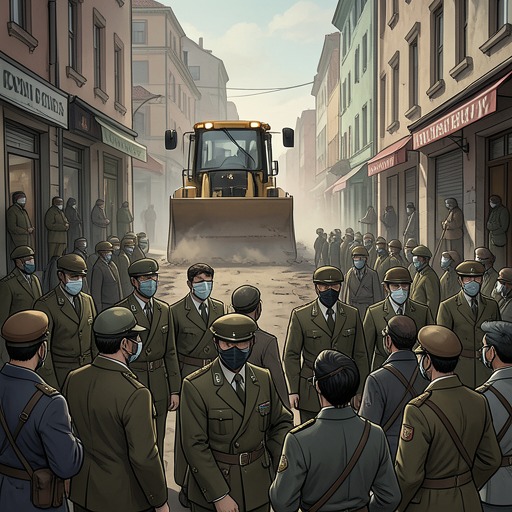
Saleem’s release and the dispersal of the 420 children
Midnight's ChildrenSaleem’s release and the dispersal of the 420 children mark the end of their imprisonment under the Emergency, but not a return to what came before. In late March 1977, Saleem leaves the palace of the howling widows blinking in the sunlight; soon afterward, the 420 survivors see in one another the memory of their forced sterilization and disperse, unable to bear that recognition. Their release is at once political reprieve and collective unmaking.
Release After the Emergency
Saleem’s release is sudden and bewildering. He emerges without initially knowing how or why he has been freed. Only later does he learn that the Prime Minister had called a general election on January 18, the very day the sterilization campaign ended. The connection is bitterly precise: the prisoners’ fate had been bound to the political crisis, yet Saleem is released before he understands the electoral defeat or the destruction of files associated with the regime.
The change of government offers no uncomplicated promise of renewal. Saleem hears that the Janata Party has come to power, and that the nation’s hopes have been entrusted to an elderly leader; he doubts that this amounts to a new dawn. After the political violence and coercion he has endured, he feels exhausted by politics rather than restored by its reversal.
The Survivors Disperse
The 420 emerge into the sunlight and tumult of the gullies of Benares. They look at one another and encounter the memory of their gelding reflected in each other’s eyes. The recognition is shared, but it cannot hold them together: unable to bear the sight, they mumble farewells and scatter, for the last time, into the healing privacy of the crowds.
That dispersal is the episode’s decisive consequence. The children regain the possibility of moving freely among other people, but the community that had joined them through extraordinary birth and shared powers has been broken by state violence. Crowds offer privacy and concealment, not restoration; the survivors leave one another carrying an experience they can recognize but cannot transform into a lasting reunion.
A Release Told Through Fragments
The account refuses the shape of a triumphant climax. Saleem calls his recollections scraps and shreds, and says that he must build reality from gaps and clues rather than recount a fully recovered sequence. He specifically recalls a glimpse of a file marked with tell-tale initials and later learns from wind-blown newspapers that his uncle, Mustapha Aziz, has been killed by unknown assassins. These pieces belong to the uncertain world from which he narrates his release, not to a complete explanation of it.
The broken form makes the dispersal more than a plot endpoint. Saleem cannot supply a seamless account of political transition or restore the group through narration; memory itself arrives scattered, like the people leaving Benares. The episode closes the children’s shared ordeal while preserving its cost in bodily memory, lost solidarity, and the gaps through which the past must be pieced together.